
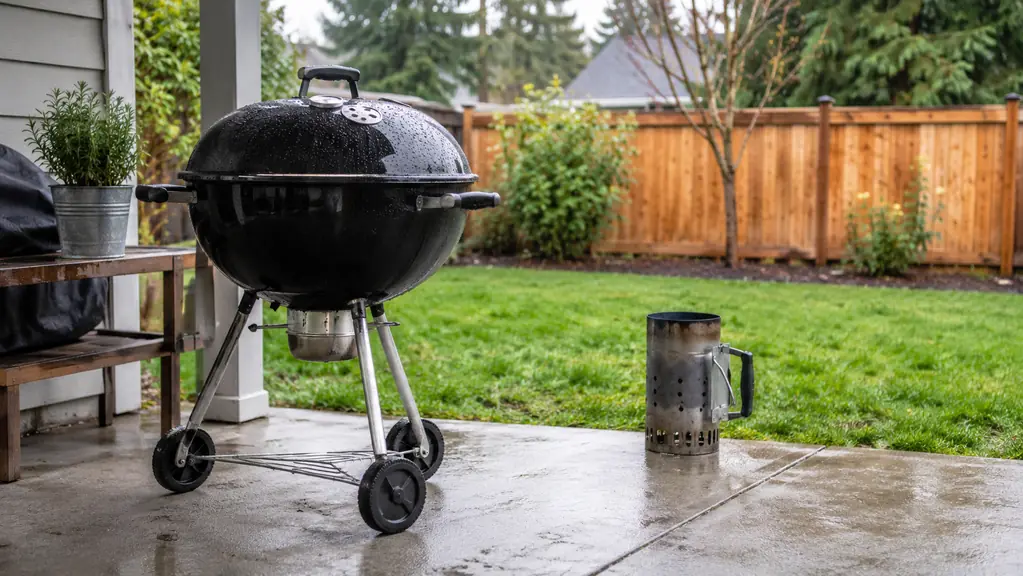
The first time I used a chimney starter I got it wrong in a way that should have been obvious. I set it on the concrete pad, stuffed newspaper into the bottom, lit the paper, and then stood there for twenty minutes watching the coals on top stay black while the flame underneath burned itself out. Nobody had explained that the fire has to come up through the coals rather than sit under them like a campfire. That one idea is what the Weber Rapidfire is built around, and it is the reason this one lights a full load when a fair number of cheap copies just smolder and sulk.
I have cooked over charcoal for about thirty years, most of it on a covered patio outside Salem, Oregon, in weather that runs from a dry August evening to a sideways rain in February. I am not a competition cook and I am not going to pretend a chimney starter changed my life. What I can tell you is where this one earns its space in the shed, where it annoyed me, and the handful of things I wish somebody had said out loud before I bought my first one. If you want the short version, it is in the verdict box. If you want the version that saves you a dead patch of lawn, keep reading.
The Quick Verdict
Lights a full load of charcoal in about fifteen minutes with no lighter fluid. The plastic handle stays usable, the steel above it does not, and ash drops straight out the bottom onto whatever you set it on.
Amazon Check Today's Price →The chimney starter that actually earns its spot on the patio
Alloy steel body, cone-shaped grate in the bottom, plastic handle. Seven and a half inches across and about thirteen inches tall. It lights a full load in roughly fifteen minutes and it does not need lighter fluid to do it.
Amazon Check Today's Price on Amazon →How I've Used It
My first chimney starter was a cheap one from a hardware store that was closing. The grate in the bottom was a flat disc punched with holes, and the coals sat on it the way a lid sits on a pan. Half the time the fire went out. The other half it took thirty-five minutes and a lot of blowing through the bottom vent. When I finally replaced it with the Weber, the difference was not the name stamped on the side. It was the shape of the grate.
Most weekends from April through October I cook for two. A few times a summer the band comes over, which means twelve to fourteen people, two coolers, and a grill that has to run for three hours. That is a two-load night. I light one chimney, dump it, light a second while the first is settling, and then I am done fiddling with fire for the rest of the evening. That is the entire reason I care about a chimney starter. It lets me stay outside with people instead of crouching over the grill with a long lighter and a bad attitude.
The cook I judge it by is a Saturday in July, fourteen people, chicken thighs on the kettle and a pork shoulder going low and slow on the cool side. I lit the first chimney at four, dumped it against one side of the charcoal grate, and had a two-zone setup running by twenty past. The thighs went over the coals at six, and I lit the second chimney while people were still working through the first round of food. Two loads, one match each, no lighter fluid, and I never lost the fire. That is the whole job, and it did it without me thinking about it.
It also goes camping. Oregon coast in July, Cascades in September, thrown in the truck bed next to the camp box. Wind is the enemy out there. A chimney starter in a steady breeze needs a windbreak or it eats newspaper faster than the coals can catch. That is true of every chimney starter I have used, including this one, and it is worth knowing before your first trip to the beach.
What It Gets Right
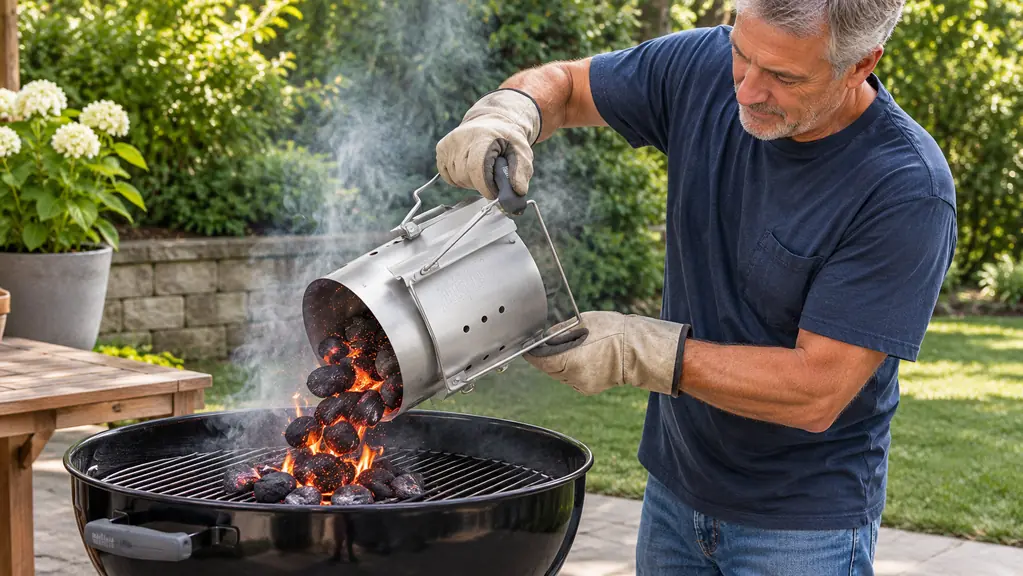
The cone-shaped grate is the part that matters. Instead of a flat disc, the Weber has a cone of steel sitting above the bottom opening, and the coals rest on the slopes of it. Air and flame come up through the middle of that cone and into the center of the coal pile, so the load lights from the inside out rather than only along the bottom edge. That is why a full chimney is ready in about fifteen minutes. It is also why the coals come out of the chimney already in a rough mound, which mattered more than I expected the first time I used it.
The size is right for a full kettle. Seven and a half inches across and about thirteen inches tall means a full load is enough to run two zones in a 22-inch grill, coals banked on one side and a clear side for finishing chicken or resting a reverse sear. I have never needed a third load for a normal cook for eight people. On a band night I light the second chimney and let it sit while the first one does the work.
The second thing it gets right is smaller than the grate and easier to miss. The tube is straight and the top rim is even, so a full load tips out in one motion instead of dribbling. Cheap starters I have owned had rims that bent after a season, and then the coals hung up on one side while you tipped the thing further and further over the grill. Mine has held its shape apart from the dent. That sounds like nothing until you are holding a hot tube at an angle waiting for the last of the coals to fall out.
The body is alloy steel and the handle is plastic. That pairing is correct, and the plastic is not a corner cut. A metal handle on a steel tube full of burning charcoal would be useless. The plastic stays cool enough to hold bare-handed while the steel above it does not, which is why the handle is where it is and why you keep your knuckles back from the tube.
Fifteen minutes from a sheet of newspaper to coals with gray edges, and no lighter fluid taste anywhere near the chicken.
The Parts Nobody Mentions
Nothing on this tool shields your hand from the body. The handle is fine. The steel six inches above it is not, and a full chimney throws enough heat that the whole tube is uncomfortable to stand near after ten minutes of burning. I took the hair off the back of my hand once reaching across it to move a spatula. That is not a Weber defect, it is what a steel tube full of fire is, but the product photos do not show it and the listing does not say it.
Ash falls straight out of the bottom. There is no pan, no catcher, nothing. Set it on grass and you will have a dead circle in that spot for a month. I set mine on the concrete pad and I still sweep up afterward. If your grill lives on a wooden deck, buy a paving stone or a metal pan to put under it first. This is the single most common thing I see people get wrong, and it is the one that costs them a board.
Newspaper is inconsistent. A tight twist of two sheets with a splash of vegetable oil on them lights reliably. Loose pages out of the recycling bin burn too fast and leave you relighting. On a breezy day even a good twist can go out before the coals catch, and then you are on your knees with a match. I keep a stack of newspaper and a small bottle of oil in the shed now, and the lighting routine takes two minutes instead of five minutes of fiddling.
Storage is on you. There is no hook, no bracket, no cover. Mine sits on a shelf in the shed next to the charcoal bin, and because it goes in empty and dry it has stayed in decent shape apart from the dent. If it goes in while it is still warm with rain on the ground, you are putting moisture into a steel tube and leaving it there. Let it cool on the concrete, knock the ash out, then put it away. Thirty seconds of work that adds years.
What I Liked
- Cone-shaped grate lights a full load from the inside, ready in about fifteen minutes
- Seven and a half inches across and about thirteen inches tall, which suits a full kettle cook
- Alloy steel body with a plastic handle that stays cool enough to hold
- No lighter fluid, so no chemical taste on the food
- Handles a second load on a long cook and travels fine in a truck bed
Where It Falls Short
- No heat shield, so the steel body gets hot enough to burn a hand
- Ash drops straight out the bottom onto grass, deck, or patio
- Needs a windbreak on breezy days or the newspaper burns out early
- It dents and rusts if it is dropped or left out in the rain
- Not faster than a gas grill, about fifteen to twenty minutes from cold
Where It Falls Short
It dents. Mine fell off the tailgate last summer, landed on the grate side, and now the bottom is slightly out of round. It still works. It just does not sit flat anymore. Thin steel tube, no surprises there. And if you leave it out in the rain, which from October to May in the Willamette Valley is a real risk, it will rust. Mine lives in the shed. If yours lives next to the grill uncovered, expect a brown film on it by spring.
Small pieces of charcoal and broken briquette dust fall through the cone grate and collect at the bottom opening. It does not take much. I keep a cheap paint stirrer on the shelf and knock the bottom out before every cook, which takes ten seconds and keeps the chimney drawing the way it should. Nobody mentions this because it is boring, but a clogged bottom is the most likely reason a chimney starter will not light.
Pouring is a one-handed job and the coals shift as you tip. You will get more on one side of the grill than the other until you learn to pour low and slow from about six inches up, then even things out with tongs. My first few pours dumped half the load in one spot and scorched the thighs. That is user error rather than a design flaw, but it is user error nobody warns you about.
The handle is short, which is fine bare-handed and awkward in a heavy leather glove. If you wear thick gloves, you end up pinching the handle instead of gripping it. It has never caused me a problem, but a friend with bigger hands than mine mentioned it, and once he said it I noticed it. Not a reason to skip the tool. Just a thing.
It is not as fast as a gas grill and it never will be. Twenty minutes from cold grill to cooking on a good day, fifteen if the newspaper catches on the first try. If you are the person who decides at 6:40 that you want a burger at 6:50, this is not the tool for you. If you have fifteen minutes and a cold drink, it is the best fifteen minutes of the cook.
Who This Is For
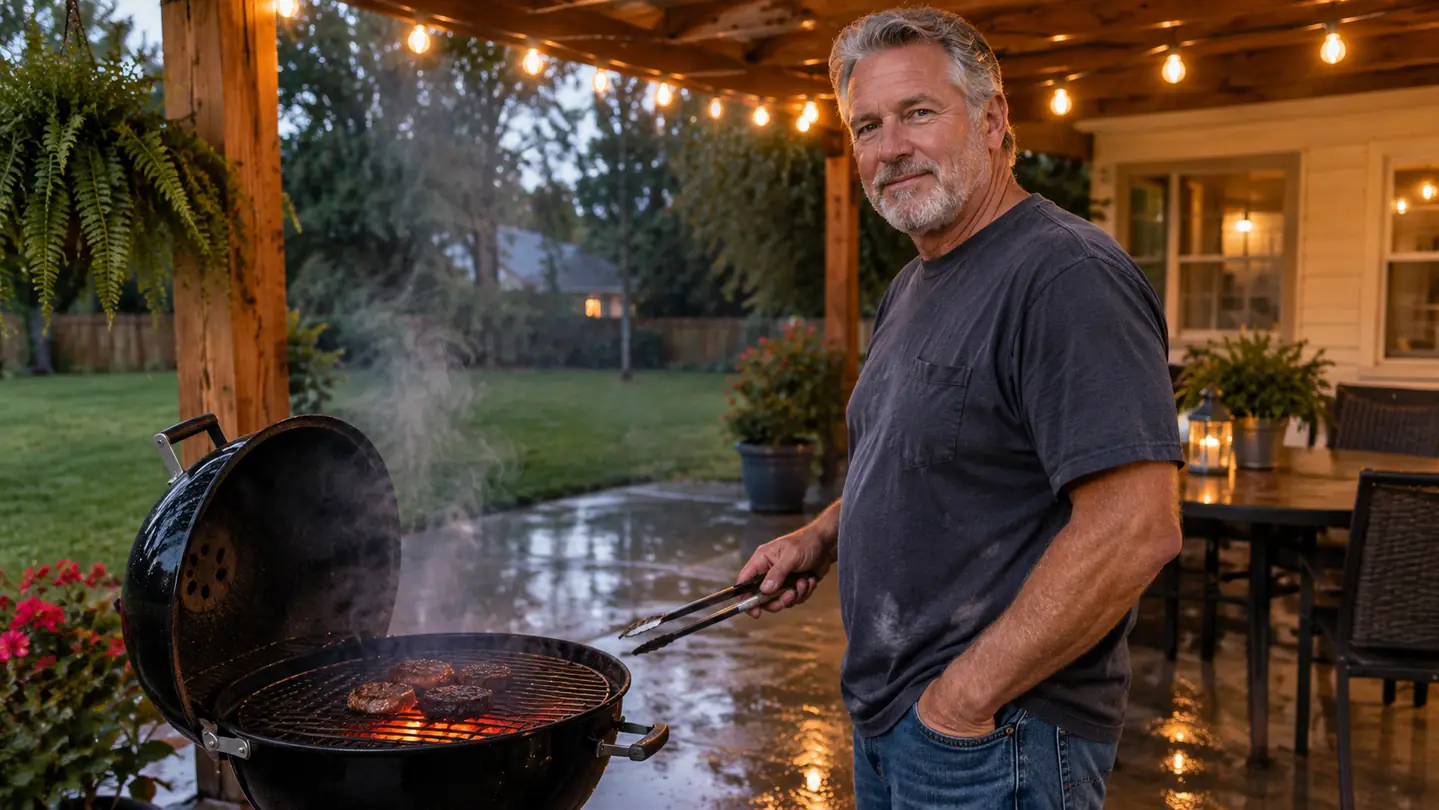
This is for the person who already owns a charcoal grill and is tired of lighter fluid, of briquettes that never fully catch, or of wax cubes that work but add a step and a cost to every cook. It suits a backyard cook who runs a load or two a week through the summer and wants the fire handled in one shot so the rest of the evening is people and food. It also suits the camper who wants real coals at a site without hauling a propane torch, as long as there is a windbreak and something fireproof to set it on.
Who Should Skip It
Skip it if you cook on gas and have no plans to change, because none of this will apply to you. Skip it if you light charcoal twice a year for a holiday and the wax cubes in the drawer already work. Skip it if you have nowhere to set it that can take heat and ash, since setting it on a deck without a stone under it is how people end up with a scorched board and a story they do not enjoy telling. And skip it if you want the shortest possible path from decision to dinner, because the gas grill wins that race and always has.
Bottom Line
I have had this one for years and I would buy it again tomorrow. Not because it is clever and not because it does anything a chimney starter should not do, but because it does the one job without asking anything of me. The cone grate, the size, the steel, and the plastic handle all point at the same thing: a full load of coals, lit from the inside, ready in about fifteen minutes. The ash on the patio and the hot steel are the tax on that. Buy a paving stone at the same time. It is the cheapest improvement you can make to the whole setup.
One last note for anybody cooking on a kettle with an ash catcher. Dump the chimney over the charcoal grate, not over the patio. The coals come out with a fair amount of dust, and the ash catcher is already sitting right there. I learned that one the slow way, and so will you if nobody says it.
Fifteen minutes, one sheet of newspaper, no lighter fluid
The Weber Rapidfire holds a full load on a cone-shaped grate and lights it from the inside out. Alloy steel body, plastic handle, seven and a half inches across and about thirteen inches tall.
Amazon Check Today's Price on Amazon →