Lighter fluid puts a taste in the meat that no amount of sauce covers up. I figured that out in my twenties, standing over a kettle grill in the dark, eating a burger that tasted faintly of a hardware store. Electric loop starters worked for a while, until the element cracked and I was back to matches. The newspaper pyramid worked until it didn't, usually with four hungry people standing behind me asking whether the coals were ready yet.
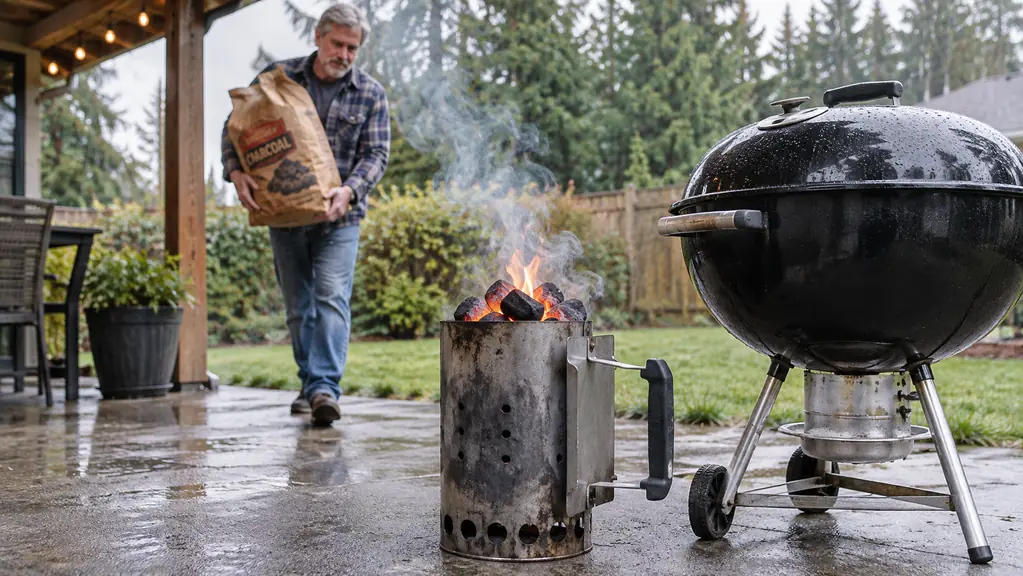
That is the problem the Weber Rapidfire chimney starter solves, and it solves it with no moving parts and nothing to plug in. Mine has lived on the covered patio behind my house outside Salem, Oregon, for a good number of seasons now. It has lit coals in sideways November rain and on a gravel pullout in the Cascades where the wind was doing its best to talk me out of dinner. It is 13 inches tall and 7.5 inches across, alloy steel with a plastic handle, and it does exactly one job.
The Quick Verdict
The fastest way I know to get a full bed of gray coals with no fuel taste and no babysitting. Buy it once, keep it by the door, and stop thinking about how to start a fire.
Amazon Check Today's Price →Stop crouching over a fire while your guests eat without you
The Weber Rapidfire holds a full load of charcoal, lights off two sheets of newspaper, and hands you gray coals in about fifteen minutes without a drop of lighter fluid. Mine has stayed by the back door for years and still pours clean.
Amazon Check Today's Price on Amazon →How I've Used It
I cook for eight to twelve people a few times each summer, when the band and their families come over. That means two full chimney loads before the first round of burgers hits the grate, and often a third partway through the afternoon. One load out of the Weber Rapidfire gets a 22 inch kettle up to cooking heat without me refilling it halfway, which matters more than it sounds when you are the one holding the tongs and somebody's kid is asking for a hot dog.
The routine never changes. I set the chimney on the charcoal grate of the kettle, put two sheets of newspaper in the bottom, light them, and walk away. Twelve to fifteen minutes later the top layer of coals has gone gray at the edges and I pour. I have never once timed it with a stopwatch, because I am always doing something else, and that is the entire point of owning one.
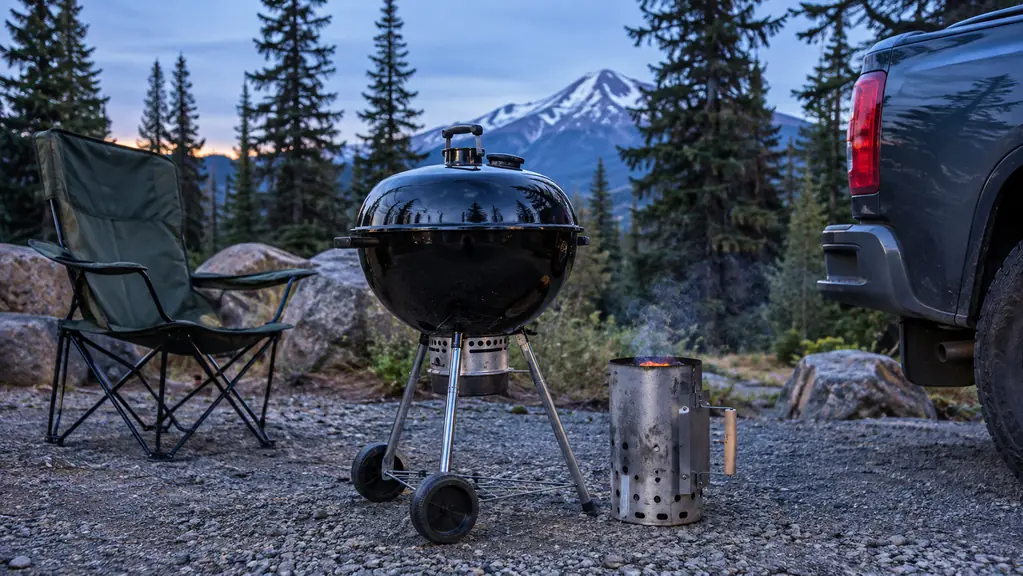
The first few seasons it never left the patio. Then I started taking it on the camping trips, and that changed how I think about it. It rides in the truck bed inside the kettle, it does not care whether the ground is level, and it works the same on a gravel pullout as it does on my concrete pad. Before every trip I check two things: that the plastic handle has not cracked, and that the cone shaped grate is still seated. Neither has failed yet, but I check anyway.
Last June I cooked for fourteen on a Saturday when the forecast said rain and the forecast was right. I lit the first load at four and had coals by twenty past, put a pork shoulder on the indirect side, and lit a second load at six for burgers. The chimney sat on the charcoal grate between loads with ash in it and did not complain once. That is not an exciting story. It is exactly the kind of evening that made me stop looking at other starters.
What the Cone Shaped Grate Does
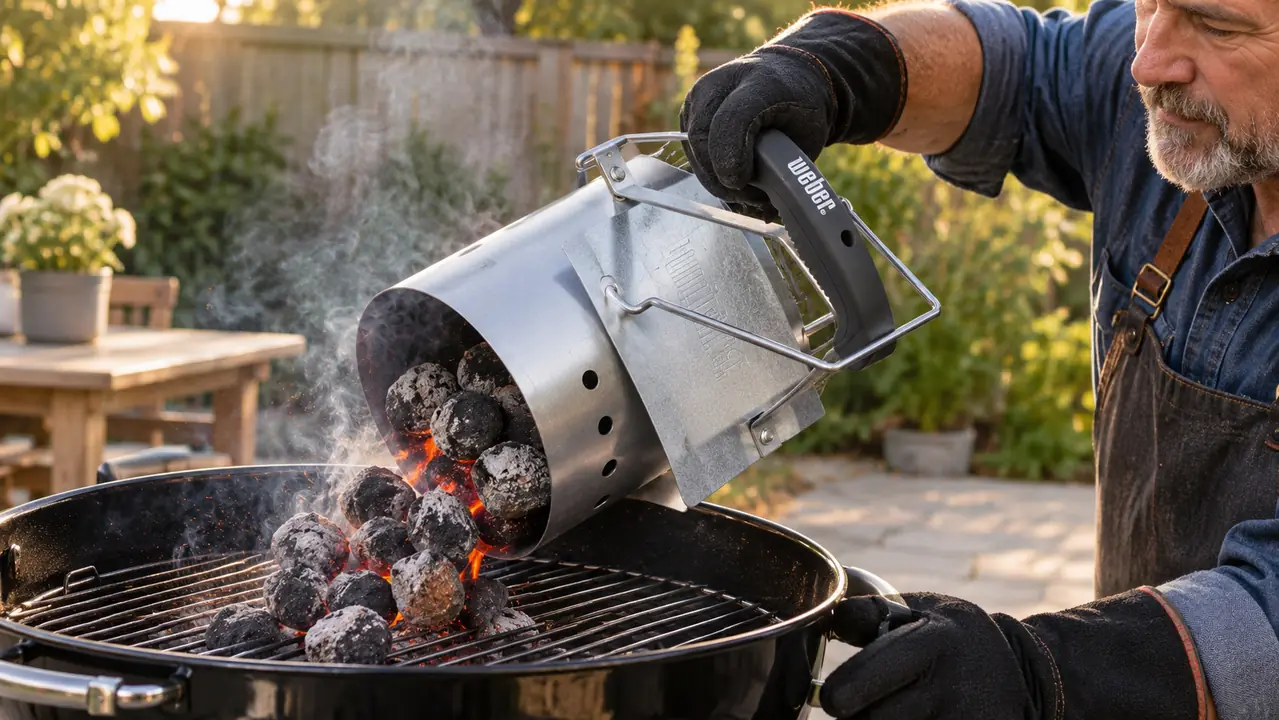
The bottom of the chimney is a cone shaped grate, and that shape is doing more work than it looks like. Ash falls through and away from the fire instead of smothering it, and air gets up under the coals where a fire wants it. A starter with a flat bottom clogs once the ash builds up. The cone keeps feeding the fire until the coals are actually ready, not just lit.
It also means the Weber chimney handles lump charcoal, not just briquettes. Lump burns hotter and faster and throws off a lot more ash, and a starter with a flat bottom will choke on it halfway through. I use lump for steaks and briquettes for a longer, steadier fire under a pork shoulder, and I do not have to change anything about how I light it either way.
One thing worth knowing: the chimney lights from the bottom up, so the coals at the top of the pile are the last to catch. That is why you see gray at the edges before the middle is ready. Give it another two or three minutes and the whole load comes up together. Pour too early and you get a fire that dies halfway through the first batch of burgers, and then you are relighting while everyone waits.
Cleaning is a shake and a brush. I tip the ash out over the compost pile and knock the grate with a stiff brush every few cooks. There is no disassembly, nothing to replace, and no parts to lose in the grass. The alloy steel has not warped after all this time and the grate still seats the way it did the first week, which is about all I ask of a tool that sits in fire on purpose.
Lighting Coals in Rain, Wind, and Cold
Oregon gives me a long wet season and a short dry one, and I cook under the patio cover from October through May. Rain is not really the problem, because the cover keeps it off. Wind is the problem. On a breezy afternoon the newspaper burns off before the bottom coals catch, and I am standing there with a second set of matches feeling foolish.
The fix is not complicated. I turn the chimney so the wind hits the side of it instead of blowing straight across the top, and I use a little more paper than I think I need. When it is really blowing, I set the chimney on the concrete pad in the lee of the house, light it, and go back inside. Nine times out of ten it comes up on its own without any further help from me.
Cold is a different animal. Charcoal is slow to catch at 38 degrees and no starter on the market changes that. What the Weber Rapidfire does is let me light it once and leave, instead of standing over it feeding paper. I come back out fifteen minutes later, the top is gray, and I pour. That is the whole reason it lives by the back door instead of out in the shed.
I have lit it in February with snow on the ground, under the cover, and it took about twenty minutes instead of fifteen. Nothing dramatic, just slower, and the coals still came out ready to cook on. If you are cooking in real cold, plan on an extra five minutes and throw in one more sheet of paper. That has been a reliable enough rule that I stopped thinking about it.
It has lit coals in sideways November rain and on a gravel pullout in the Cascades where the wind was doing its best to talk me out of dinner.
The Handle and the Pour
The handle is plastic and shaped so a gloved hand can get around it. I wear a leather welder's glove on my right hand for the pour, and I have never had the handle feel like it was going to give. A full chimney of coals is not light, and the handle is the part that would tell you first if the design were weak. It has not.
Pouring takes a little practice. Tip it slowly and let the coals slide out in a stream instead of dumping them in a pile. A pile puts all the heat in one corner, and then you spend ten minutes chasing coals around the kettle with tongs while the grate heats unevenly. Tip it and walk it around the edge, and the coals land roughly where you meant them to.
One mistake I made early was pouring on a windy day. Coals and ash both go where the wind takes them, and you end up with sparks on the patio and a thin layer of ash on everything within reach. Pour with your back to the wind or wait for a lull. It is a two second decision that saves you ten minutes with a broom.
The one thing I would change is capacity for a big cook. When the band and their families come over I want two chimneys going at once, and the honest answer is to own a second one. That is a complaint about how many people I feed, not about the tool. For a normal weeknight dinner for two or four, one load is more than enough and I never think about it.
Where It Falls Short
It is not a grill. It does not sear, it does not smoke, and it will not cook anything. It gets coals ready and then it gets out of the way. If you do not already have a grill to pour them into, this is the wrong purchase, no matter how well it works.
The bottom gets hot enough to scorch a wood deck and hot enough to ruin a plastic folding table. I set mine on the concrete pad or directly on the kettle's charcoal grate, never on anything I would miss. Somebody will set one on a picnic table this weekend and have a bad afternoon because of it, and the instructions will not save them.
And it is not fast the way a gas grill is fast. Fifteen minutes is fifteen minutes. What it is, is hands off, which is a different thing entirely. I light it, go inside, pour a glass of something, and come back to coals. If you want dinner on the table in eight minutes flat, buy a gas grill and skip this whole category of cooking.
Storage is the other small annoyance. It does not fold, it does not collapse, and it eats a shelf in the shed if you do not keep it near the grill. Mine lives next to the kettle under the covered patio, which works because the patio is covered. If you have nowhere dry to keep it, it will sit out in the weather and look like it.
What I Liked
- Lights a full load of coals in one go with no lighter fluid taste
- Cone shaped grate handles lump charcoal as well as briquettes
- Plastic handle is comfortable to grip with a glove on
- No moving parts, nothing to replace, nothing to lose
- Nests inside a kettle and travels to camp without complaint
Where It Falls Short
- Bottom gets hot enough to damage a wood deck or plastic table
- Still a fifteen minute wait before you cook
- One load is not enough for a very large crowd
- No way to tell the coals are ready except by looking at them
Who This Is For
Anyone who cooks with charcoal and is tired of lighter fluid, cracked electric loops, or rebuilding a newspaper pyramid every single time. It is also for the person who hosts. The real value is not the fifteen minutes, it is that those fifteen minutes are yours to spend talking to the people who came over instead of crouching over a fire with your back to them.
It suits campers too. It rides inside the kettle in the truck, it does not need power or a level surface, and it works in wind and gravel. And it suits anyone who would rather buy one simple steel tool than a series of fire starters that keep breaking and getting replaced.
The person I would hand this to is the one who has been through two or three electric starters and a few bottles of lighter fluid over the years, and who is tired of buying the same solution over again. This is the version of that tool that stays. Mine is not new and it is not pretty, and it still does the job every time I take the cover off the kettle.
Who Should Skip It
Gas grill owners. There is nothing here for you, and a chimney starter does not work with a gas grill in any case. This is a charcoal tool from top to bottom.
People who want dinner in ten minutes flat should skip it too, as should anyone who cooks with charcoal once a year and is perfectly happy with a store bought starter block. A chimney is not complicated, but it does have a rhythm to it, and if you are not going to learn the rhythm you will not get much out of the tool. It rewards a little repetition and nothing else.
One steel tool, fifteen minutes, and no fuel taste in the meat
The Weber Rapidfire has been on my patio for years, it has never needed a replacement part, and it still does the one thing I bought it for. If you cook with charcoal more than a few times a summer, it earns its spot by the back door.
Amazon Check Today's Price on Amazon →