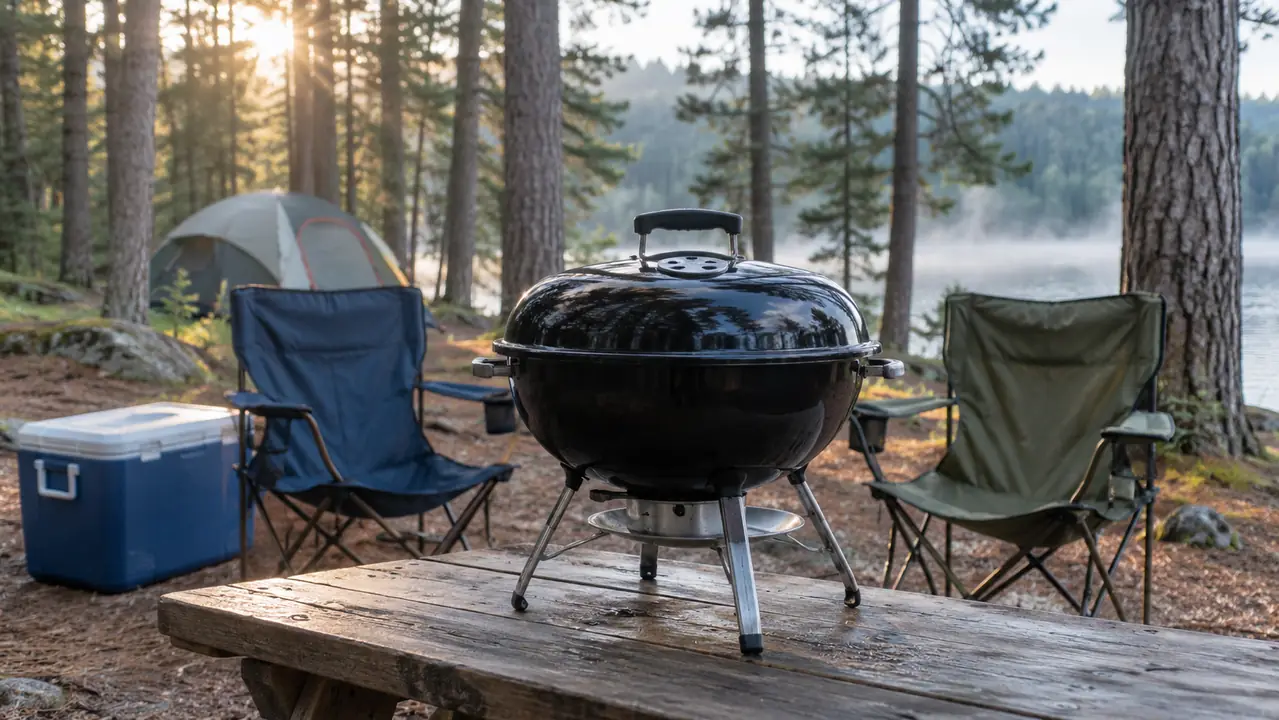
The first time I hauled a full size kettle grill to a campsite in the Cascades, I spent the whole evening crouched over it while everyone else sat around the cooler. That is the trade camp cooking usually asks of you. Bring something too big to be worth packing, or something too small to hold heat, and then babysit it. The Weber Go-Anywhere is the first portable charcoal grill I have used that let me walk away from it. I have run it on the coast in a wind that flattened paper plates, and I have run it on a gravel pad in the Cascades with the temperature heading for forty degrees. It held both times.
What follows is the sequence I actually run, from the driveway in Salem to a picnic table outside Newport. None of it is difficult, but the order matters. Skip the first step and you may not be allowed to light anything at all. Skip the last one and you are the person who left a hot grate in the brush. The grill itself is a 14 pound metal box, 19.5 inches wide, 11.5 inches deep and 15 inches tall, with 160 square inches of cooking surface. That is honest room for two to four people, which is the size of the group I usually cook for.
A 14 pound grill that fits behind the truck seat and still holds a two zone fire
160 square inches of grate, a two piece cooking surface you can lift mid cook, and a char rail for arranging coals. This is the one that stopped staying home.
Amazon Check Today's Price on Amazon →Step 1: Find Out What the Land Manager Allows Before You Pack
Charcoal is the first thing to check, and it is the thing people skip. Every campground I have stayed at in Oregon has its own rule about open flame, and those rules tighten fast once the summer dries out. A developed campground with steel fire rings is usually fine with charcoal. Dispersed camping on national forest land in the middle of a fire restriction often is not. In those weeks a gas stove may still be allowed while a charcoal grill is not, which is worth knowing before you load the truck.
The check takes five minutes. Call the ranger district or look up the specific campground, not the county, because the rule that applies is the one the land manager wrote. Ask two questions. Is charcoal allowed today, and is there a fire ring or do I need to pack a stand. If the answer to the first one is no, leave the grill home. Arguing with a host about it at nine at night is a bad use of a good evening.
One more thing worth knowing before you go. Some sites want coals dumped in the fire ring and some want them packed out, and that difference changes what you bring for cleanup. I carry a small metal bucket with a lid either way. It weighs almost nothing and it means I never have to guess at the end of the night.
Step 2: Pack It So the Truck Does Not Smell Like Last Night's Fire
Charcoal dust and old ash are what make a truck cab smell like a chimney for a month. I empty the ash at home, every time, before the grill goes in. Not the next morning, not at the campsite. At home, into a metal can, after the coals are cold. Then the grill rides in the bed of the pickup with the lid down, wedged against the cooler so it does not slide. Fourteen pounds does not sound like much until it is sliding into your tailgate on a curve.
The rest of the kit fits inside the grill if you are willing to pack it that way, which is how I do it. A small chimney starter, a bag of charcoal, a lighter, a grill brush, a folded towel. The 19.5 by 11.5 footprint is smaller than a milk crate, so it slides behind the seat of an extended cab or sits flat on a rear floorboard. The cooking grate comes out in two pieces, which matters later, and the handle is plastic, so you are not grabbing bare metal when you move the thing.
I keep the charcoal in a separate tub with a lid. Not because the Weber needs it, but because a wet bag of charcoal is a wasted trip. Oregon in June will hand you a rain shower out of a clear sky and then apologize with sun twenty minutes later.
Step 3: Set Up Somewhere Level, Out of the Wind, Away From the Tent
Wind is the enemy of a small charcoal fire. It eats your fuel, it pushes heat to one side of a 160 square inch grate, and on the coast it will do both while you are still opening the bag. I look for a spot with something solid on the windward side. A picnic table bench, a cooler, the truck, a big rock. Something with a gap between it and the grill, never touching. The grill is free standing, so it can sit on a table or go on the ground, and I pick based on how my back feels.
Level matters more than people think. A grill tipped two degrees sends the coals into one corner, and you end up with half your grate at searing heat and half at nothing. On a picnic table I check with a hand on the lid. On the ground I scrape a flat spot with a boot heel. Then I set the grill down and leave it there, because moving a lit grill is how you lose your eyebrows.
Distance from the tent is the other rule. Ten feet minimum, more if there is any breeze, and never inside a vestibule or under a tarp. I watched a man cook under a rain fly once. He stayed dry and his fly did not, and he spent the rest of the weekend explaining the holes to his brother in law.
A full chimney of coals banked to one side, and a two piece grate you can lift with tongs. That is the whole trick on a small grill. Two zones instead of one, and a way to add fuel without moving the food.
Step 4: Build a Two Zone Fire in a Small Box
A full chimney of lit coals is more than most people expect to put in a grill this size. It is also close to the right amount, because you are not filling the whole floor with it. I pour the lit coals onto one side and leave the other side empty. That gives me a direct zone for anything that wants color and an indirect zone for anything that needs to finish. The char rail insert is there for exactly this, and it keeps the coals where you put them instead of letting them creep across the bottom every time you move the grate.
The two piece grate is the part I did not appreciate until I had used it a few times. If the fire fades halfway through a batch of chicken thighs, you lift one half with tongs, drop four or five fresh coals onto the hot side, and put the grate back. On a single piece grate you are lifting the whole thing with food on it, which is a two person job and a bad one. The cooking area is small enough that a single layer of coals goes a long way, so you are not refueling often.
Give the Weber fifteen minutes before you cook anything. Coals that are still flaming are coals that will scorch the outside of a piece of meat and leave the middle cold. You want them grey at the edges with a red core and no flame at all. On a windy day that takes longer, so I light the chimney before I set up the rest of camp and let it work while I am doing something useful.
Step 5: Cook Hot and Fast, Then Put the Coals Out Dead
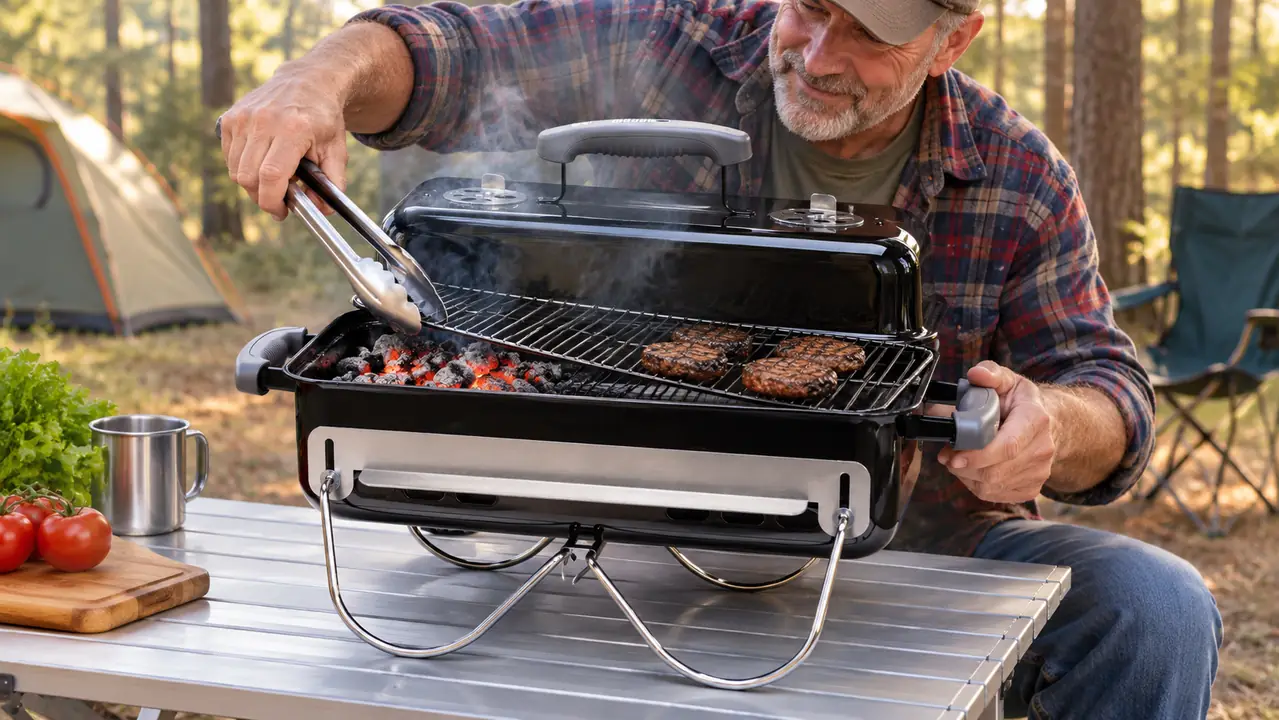
This is not a smoker and it should not be treated like one. Direct heat over a small coal bed is what it does well. Burgers, sausages, chicken thighs, steaks, corn, a whole pile of peppers. I sear over the coal side, then slide things to the empty side and put the lid on for a few minutes to finish. A thick pork chop takes about twelve minutes that way, most of it on the quiet side of the grate.
Two things I have learned the hard way. Do not walk away with the lid off, because a small coal bed burns down faster than a big one. And do not crowd the grate. 160 square inches fits four burgers with room to turn them. It does not fit eight, and trying is how you steam meat instead of grilling it. If the group is bigger than four, cook in batches and let the first batch rest on a plate under foil.
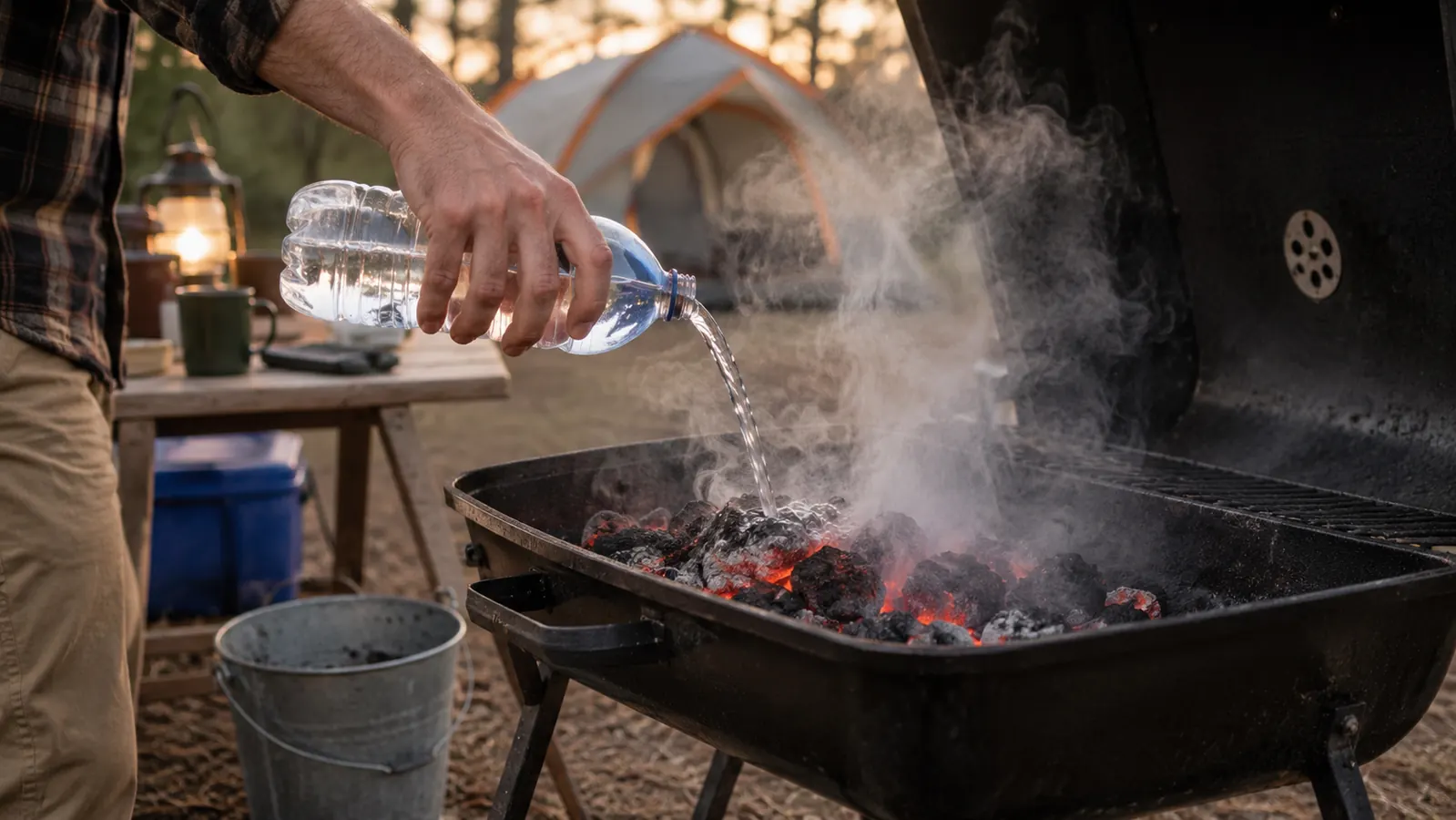
When you are done, kill the coals. Not damp them down, kill them. A quart of water poured over the coal bed, stirred with a stick, then more water. If you are packing out, wait until they are cold enough to touch and put them in the metal bucket. If the site has a fire ring, dump them there and stir them into the ash. A coal that looks dead can sit warm under ash for hours and come back to life in a gust of wind.
What Else Helps
A chimney starter is the single biggest upgrade to this whole routine. Lighter fluid on charcoal leaves a taste that no amount of sauce covers, and it makes the fire unpredictable. A small chimney and two sheets of newspaper gets a bed of coals going in about fifteen minutes while you are still setting up chairs. It also nests inside the grill for travel, which keeps the packing list short and the truck bed clear.
A folding side table at camp height saves your back. The grill is 15 inches tall, so on the ground it is a squat, and on a picnic table it takes up the table you wanted for plates. I use a small roll top aluminum table and put the grill on that, with the charcoal tub underneath. Worth the four pounds. A headlamp also beats a lantern for cooking after dark, because it points where you are looking instead of into your eyes.
Finally, a word about size and honesty. The Weber Go-Anywhere is a two to four person grill, and 160 square inches is real but not generous. If you are feeding eight at a campsite, you want two batches or a bigger grill, and I would rather you know that now than at the table. I wrote up how this one has held up over a few seasons in my long term review, and I put it head to head with the Cuisinart 14 inch portable grill if you are still weighing options.
Everything above packs into a 14 pound box that lives behind the truck seat
160 square inches, a two piece cooking grate, and a char rail for a two zone fire. It is the grill I stopped leaving at home.
Amazon Check Today's Price on Amazon →